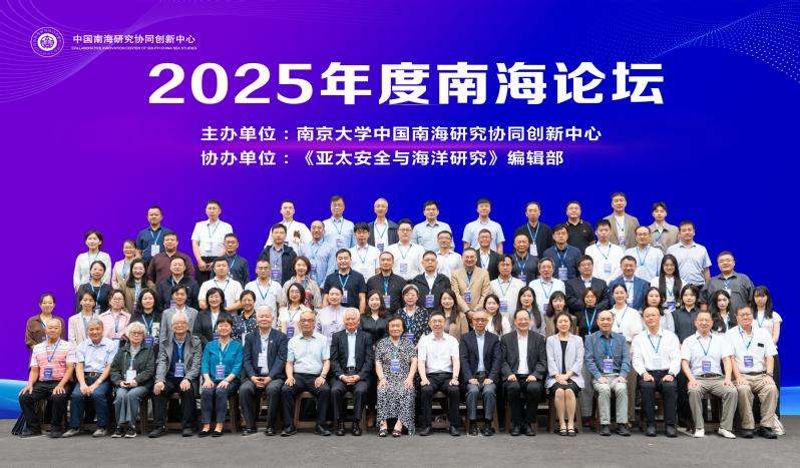
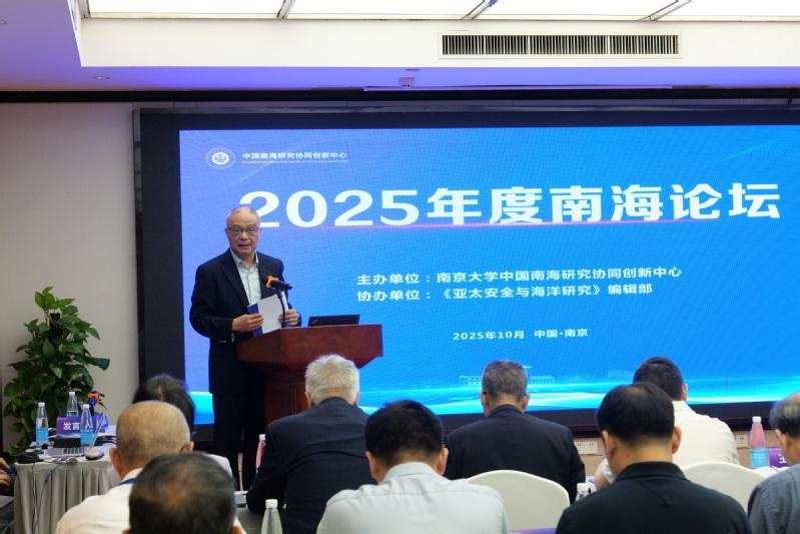
On October 12, the 2025 South China Sea Forum, hosted by China Center for Collaborative Studies of the South China Sea at Nanjing University, was held in Nanjing. The event brought together over 100 experts, scholars, and government officials to discuss the post-World War II international order and new challenges facing the South China Sea region. Centered on three core themes: “The Origin, Evolution and Development of the South China Sea Disputes 80 Years After the Victory of Anti-Japanese War,” “New Issues and Challenges in Safeguarding Maritime Rights and interests in the South China Sea,” and “The Holistic Approach to National Security and the Protection of Sovereignty in the South China Sea,” participants engaged in discussions, offering suggestions for maintaining peace and stability and promoting regional prosperity and development in the South China Sea.
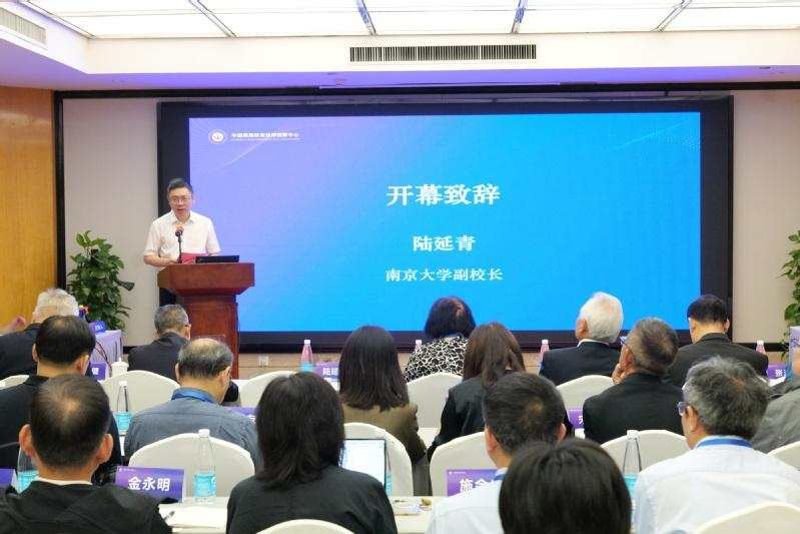
Lu Yanqing, Vice President of Nanjing University, highlighted the profound transformation in the current global maritime geopolitical landscape, and that the influence of maritime strategic issues is becoming increasingly prominent. He urged the need to construct a new framework for the South China Sea with strategic height and policy resilience that balances safeguarding rights and maintaining stability and governance.
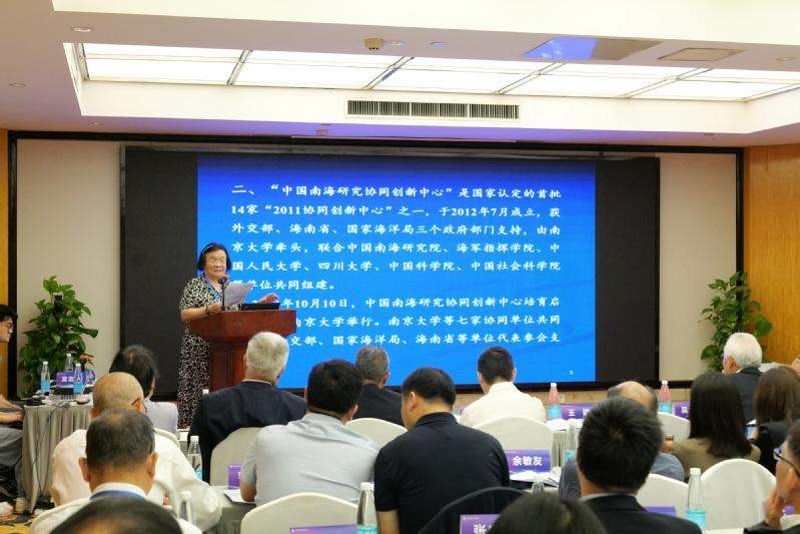
Wang Ying, Academician of the Chinese Academy of Sciences and Director of China Center for Collaborative Studies of the South China Sea at Nanjing University, pointed out that the South China Sea is a vital land and water passage, bordered by multiple littoral countries. The China Center for Collaborative Studies of the South China Sea at Nanjing University was established in 2012, it aims to promote comprehensive research on South China Sea through multidisciplinary collaboration and innovation, providing a solid academic foundation for China's strategic and common development of the South China Sea.
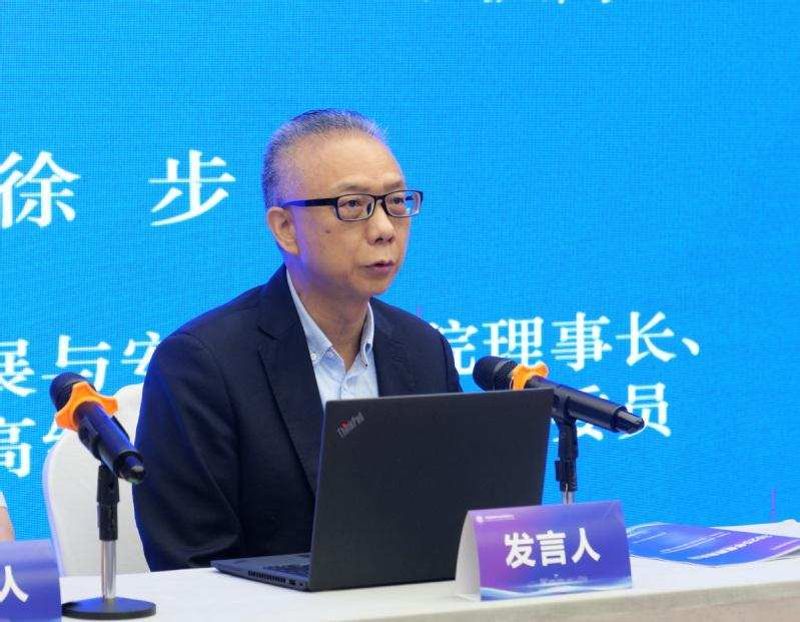
Xu Bu, Member of the High-Level Advisory Board on Effective Multilateralism of the United Nations Secretary-General and Chairman of the Institute of International Development and Security Studies at Jiangsu University, noted that current hegemonism and power politics threaten global security and impede world economic development. Establishing a more just and reasonable global governance system must be based on upholding the post-war international order. The global governance initiative proposed by China provides an effective pathway by emphasizing principles such as “prioritizing development ” and “sharing benefit”.
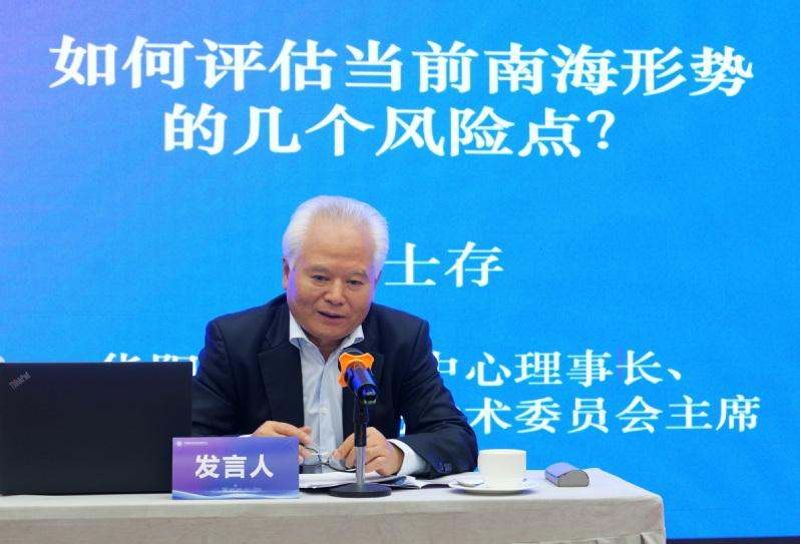
Wu Shicun, Chairman of Huayang Center for Maritime Cooperation and Ocean Governance and Chairman of the Academic Committee of the National Institute for South China Sea Studies, emphasized that the current round of militarization of the South China Sea led by the United States is the greatest risk to peace and stability. He noted that the ongoing infringement by Philippines and other claimant countries continues to intensify, posing challenges to China's sovereignty and maritime rights in the South China Sea and hence it is necessary to coordinate and advance the capacity on the part of China for safeguarding maritime rights and interests, as well as for disseminating maritime knowledge.
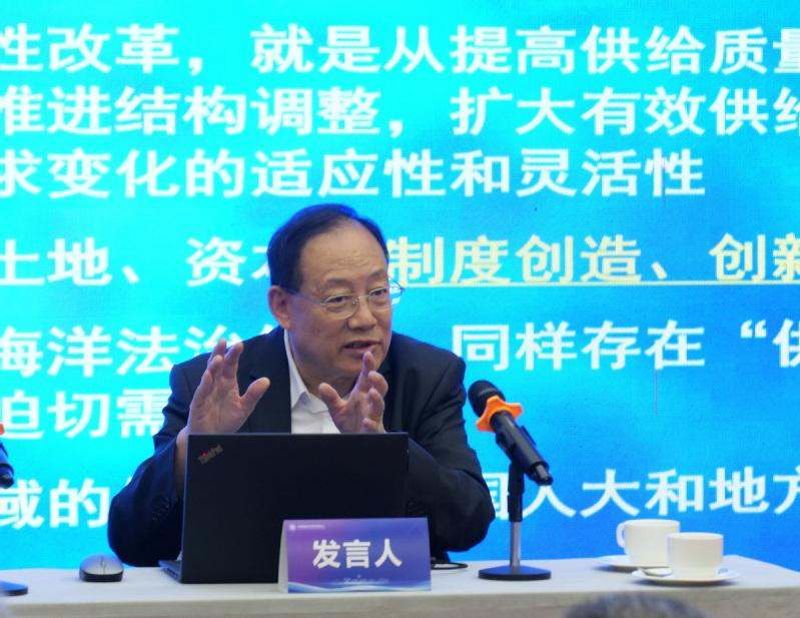
Gao Zhiguo, Former Judge of the International Tribunal for the Law of the Sea and Former President of the Chinese Society for the Law of the Sea, pointed out that China is currently in the best period for maritime development, but there is still considerable room for improvement when it comes to the construction of the maritime legal system. In his interview with the Voice of the South China Sea, he affirmed the establishment of the Huangyan Island National Nature Reserve. He also suggested that relevant government departments could undertake legislation to formulate regulations for the Huangyan Island Nature Reserve and even for the overall ecological protection and construction in the South China Sea.
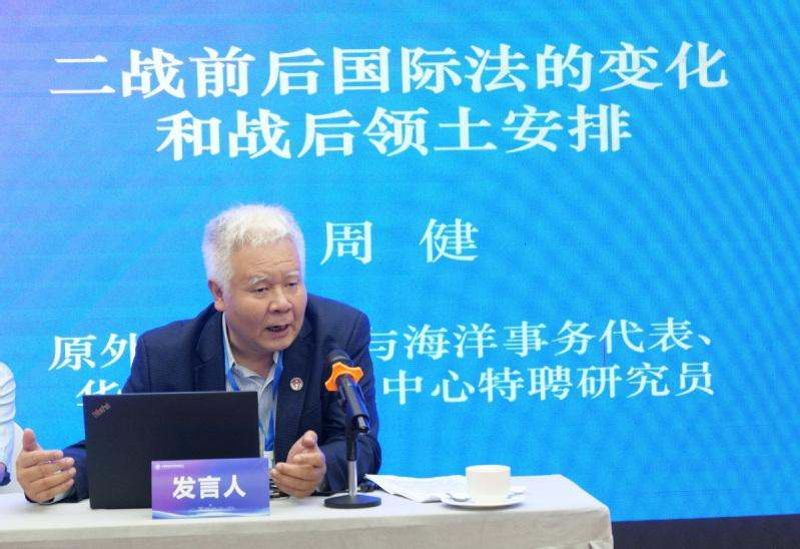
Zhou Jian, Former Representative of the Department of Boundary and Ocean Affairs at Ministry of Foreign Affairs and Distinguished Research Fellow at Huayang Center for Maritime Cooperation and Ocean Governance, expounded that in the aftermath of WWII, the Chinese government recovered the sovereignty of Taiwan and the South China Sea Islands based on a series of international legal instruments. However, some Western countries and other South China Sea disputants attempt to obscure or even distort historical facts. He stressed the need to strengthen responses and refutations, clearly and thoroughly explain the factual truth, and promote the ultimate resolution of South China Sea disputes based on an accurate understanding of history.
Zhu Feng, Executive Director of the China Center for Collaborative Studies of the South China Sea and Dean of the School of International Studies at Nanjing University, concluded that the international order is undergoing a structural transformation. China's efforts to safeguard its legal rights and maintain stability in the South China Sea have entered a new and crucial stage, requiring contemporary reflection to effectively protect its strategic and security interests.
This year's forum also hosted the “Themed Exhibition to Commemorate the 80th Anniversary of the Victory in the Chinese People's War of Resistance Against Japanese Aggression and the World Anti-Fascist War – Featuring the Restoration of Taiwan and the Recovery of the South China Sea Islands.” Relying on nearly a thousand historical documents, archives, physical objects, and images collected and organized over the years by the South China Sea Special Collection Room of Nanjing University Library, the exhibition presents the just and rightful actions of the Chinese government in restoring Taiwan and recovering the South China Sea Islands following the victory, based on the Cairo Declaration and the Potsdam Proclamation.
The South China Sea Forum, which was launched in 2013 by the China Center for Collaborative Studies of the South China Sea at Nanjing University, focuses on hotspot issues in the South China Sea. It is guided by national strategic demand and aims to maximize China’s maritime rights and interests in the South China Sea. This annual forum has been successfully held 13 times, cumulatively inviting over a thousand experts, scholars and government officials to discuss South China Sea issues. It has become a high-level, multidisciplinary, and interdisciplinary academic exchange platform for China's maritime research, generating extensive influence domestically and internationally.
(Source/Voice of the South China Sea; Trans./Wei Yawen)