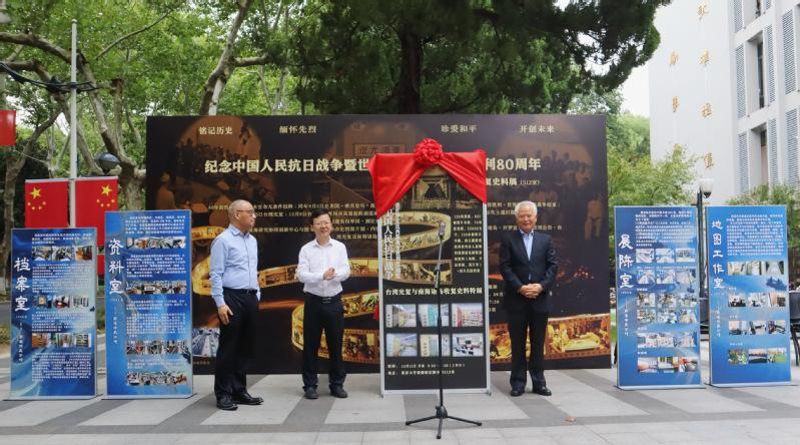
On October 13, 2025, the “Themed Exhibition to Commemorate the 80th Anniversary of the Victory in the Chinese People's War of Resistance Against Japanese Aggression and the World Anti-Fascist War – The Taiwan's Restoration and the Recovery of the South China Sea Islands,” co-organized by the Collaborative Innovation Center of South China Sea Studies and the Library of Nanjing University, was successfully held. Nearly a hundred experts and scholars attended the opening ceremony and visited the themed exhibition and the Special Collection Room. Li Bin, Member of the Standing Committee of the CPC Nanjing University Committee and Assistant President of Nanjing University, Wu Shicun, Chairman of the Huayang Center for Maritime Cooperation and Ocean Governance and Chairman of the Academic Committee of the National Institute for South China Sea Studies, jointly unveiled the exhibition.
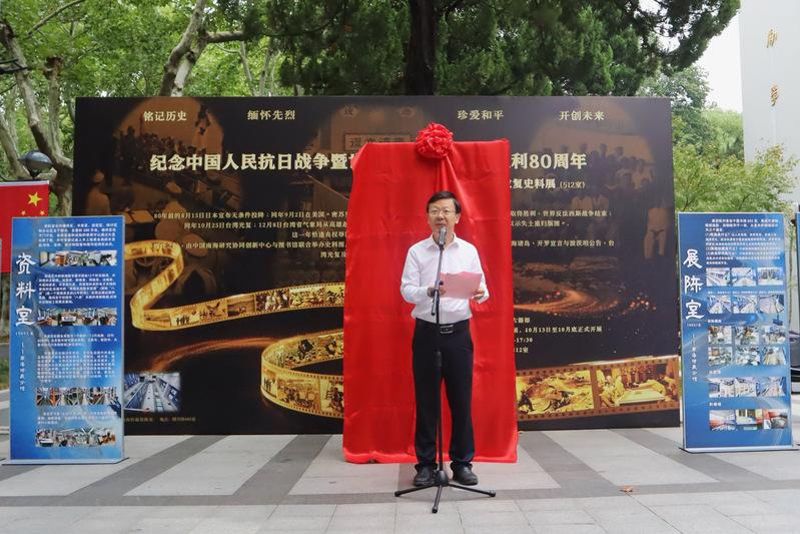
At the opening ceremony, Li Bin reviewed Nanjing University's glorious history of educational and cultural resistance for national salvation. He introduced the exhibition's purpose and its significant meaning. He indicated that Nanjing University will enhance its efforts in interdisciplinary collaborative innovation, commit to building an independent knowledge system on the South China Sea, use cutting-edge research to support discourse on safeguarding rights, apply digital technologies to innovate resource utilization, and to guide public understanding with themed exhibitions. This aims to provide more solid academic, technical, and public opinion support for serving the nation's major strategic demand regarding the South China Sea.
The exhibition was produced based on the rich collection of documents, historical materials, and images from the South China Sea Special Collection Room, Nanjing University. It is divided into five sections: The Great Transformation of the Late Qing Dynasty, The Lingering Pain of National Humiliation, The Dawn of Victory, The Restoration of Lost Territories, and Securing the Maritime Frontiers. The display consists of 120 exhibition panels, 645 images and charts, over 70 maps, more than 120 related books, and original materials donated by the family of Zheng Ziyue, including maps, hand-drawn sketches, and photos related to the recovery of the South China Sea Islands. The exhibition clearly traces the pain of lost territories stemming from the Treaty of Shimonoseki. It also presents the just acts, based on the Cairo Declaration and the Potsdam Declaration, of the restoration of Taiwan and the recovery of the South China Sea Islands after the victory in the War of Resistance. It depicts a grand vision of China and its neighbors working together in the new era to build a maritime community with a shared future.
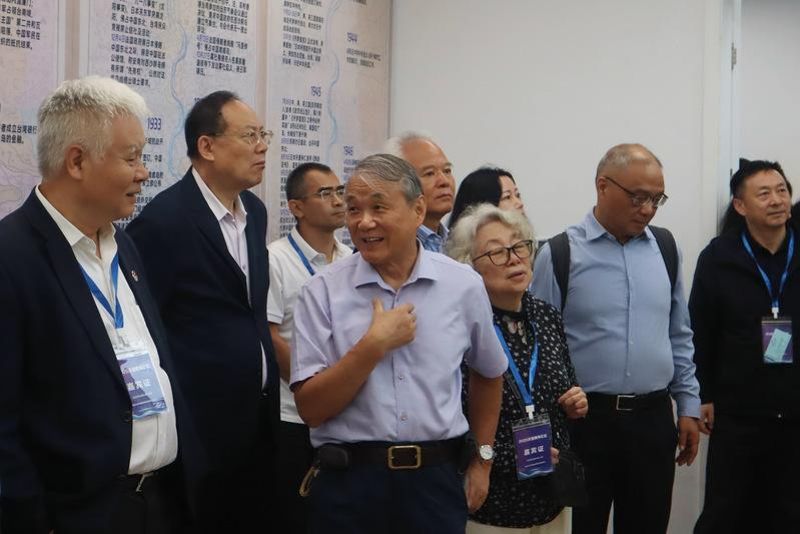
In terms of exhibition design, it included not only panel displays but also special exhibitions on maritime culture, maps, Genglubu and historical images. Augmented Reality (AR) and other new technologies were employed to present the history and culture of the South China Sea in a multi-dimensional manner. The exhibition aims to inspire people to safeguard peace with firm will, address challenges with unity, and illuminate the future with historical wisdom.
In the afternoon, aligned with the themed exhibition, an academic symposium titled “The Recovery of the South China Sea Islands and the Post-war International Order” was held. Experts and scholars engaged in exchanges and discussions on the historical significance of the Chinese government's recovery of the South China Sea Islands and its impact on the post-war international order, as well as on theoretical innovations and practical approaches for defending the outcomes of the WWII victory and safeguarding maritime rights and interests in the South China Sea.
(Trans./Wei Yawen)